South Korea has officially entered the race for sixth-generation fighter jets, signaling a major leap in its aerospace capabilities. Hanwha Aerospace recently unveiled a conceptual animation of a future fighter, showcasing innovative design features like a tailless delta-wing and advanced stealth capabilities. This move builds on the success of the KF-21 fighter and aims to integrate cutting-edge technologies such as AI, laser weapons, and autonomous systems. With global competitors also advancing their sixth-generation projects, South Korea’s entry highlights its ambition to not only develop an indigenous fighter but also to position itself as a leader in the next era of air combat.
In a landmark announcement that could redefine aerial warfare for decades to come, the United States has officially unveiled its next-generation fighter aircraft — the F-47, developed by Boeing. Billed as the world’s first operational sixth-generation fighter jet, the F-47 is poised to outclass all current combat aircraft and usher in a new era of autonomous, networked, and high-speed air dominance.
The United Kingdom is poised to launch Operation Highmast, a high-profile deployment that underscores the Royal Air Force’s (RAF) commitment to technological innovation and international defence collaboration.

 South Korea has officially entered the race for sixth-generation fighter jets, signaling a major leap in its aerospace capabilities. Hanwha Aerospace recently unveiled a conceptual animation of a future fighter, showcasing innovative design features like a tailless delta-wing and advanced stealth capabilities. This move builds on the success of the KF-21 fighter and aims to integrate cutting-edge technologies such as AI, laser weapons, and autonomous systems. With global competitors also advancing their sixth-generation projects, South Korea’s entry highlights its ambition to not only develop an indigenous fighter but also to position itself as a leader in the next era of air combat.
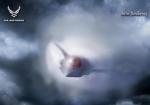 In a landmark announcement that could redefine aerial warfare for decades to come, the United States has officially unveiled its next-generation fighter aircraft — the F-47, developed by Boeing. Billed as the world’s first operational sixth-generation fighter jet, the F-47 is poised to outclass all current combat aircraft and usher in a new era of autonomous, networked, and high-speed air dominance.
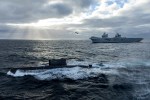 The United Kingdom is poised to launch Operation Highmast, a high-profile deployment that underscores the Royal Air Force’s (RAF) commitment to technological innovation and international defence collaboration.
 Canada Defence Journal