
In a landmark development for Canada’s defense procurement landscape, South Korean shipbuilders Hanwha Ocean and HD Hyundai Heavy Industries (HHI) have jointly submitted a proposal to supply four state-of-the-art submarines to the Royal Canadian Navy (RCN) by 2035. The estimated $20–$24 billion project marks the first collaboration between the traditionally rival firms under South Korea’s new “One Team” export initiative—aimed at bolstering global competitiveness through unified bids.
The proposal, submitted in March 2025, is part of Canada’s ambitious Canadian Patrol Submarine Project (CPSP), which seeks to replace the aging Victoria-class fleet with up to twelve modern submarines capable of patrolling Canada’s vast maritime territory, including Arctic waters.
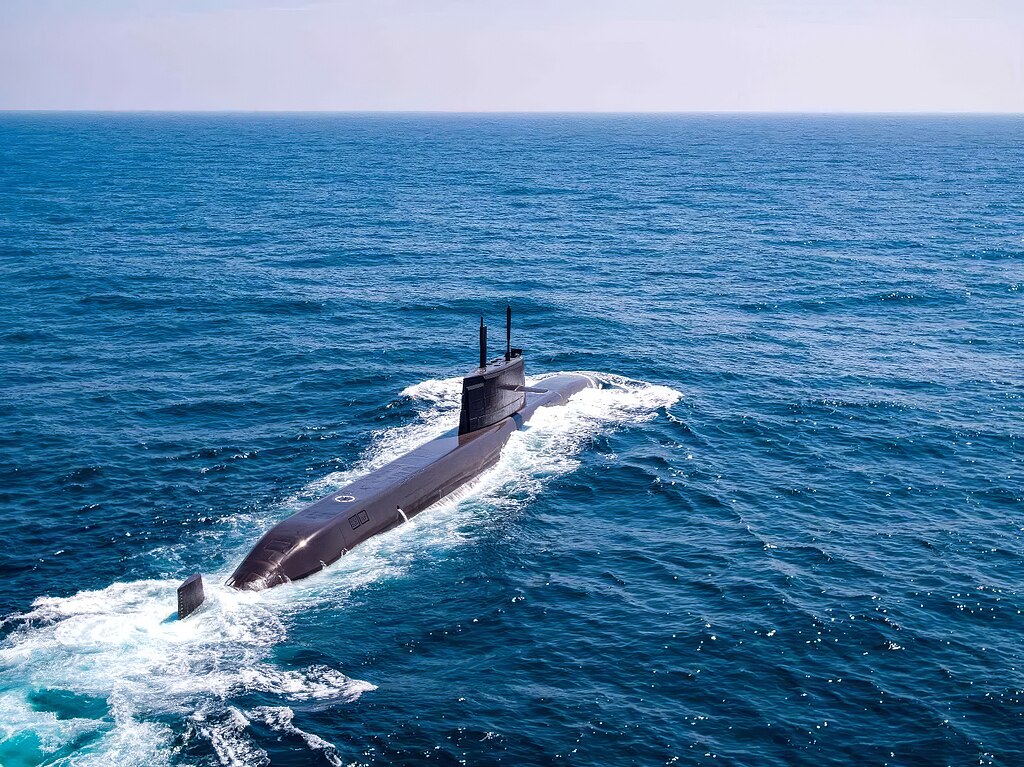
A Strategic Offering: The KSS-III Submarines
At the heart of the bid is the KSS-III (or KS-III) submarine, an advanced diesel-electric platform that displaces nearly 3,700 tons submerged and offers an operational endurance of up to 20 days without surfacing. Designed with stealth in mind and equipped with vertical launch systems (VLS) for land-attack cruise missiles, these submarines are considered among the most capable non-nuclear platforms available on the global market.
Industry experts note that the KS-III is particularly well-suited to Canadian needs, given its Arctic operational potential, modern sonar and combat management systems, and compatibility with emerging maritime security requirements.
Local Economic Benefits and Industrial Partnerships
Crucially, the Hanwha-HHI team has pledged to invest in local infrastructure by establishing submarine maintenance facilities in Canada and employing Canadian personnel. This aspect of the proposal directly supports federal objectives to grow domestic defense expertise, create high-skilled jobs, and deepen long-term technological partnerships.
For Canada, this approach represents more than a procurement—it is an opportunity to build sovereign capabilities in an increasingly uncertain global security environment.
Defense Diplomacy in a Shifting Landscape
The CPSP, formally initiated by the Department of National Defence (DND) in July 2024, reflects a growing recognition of Canada’s need to defend its three coastlines—Pacific, Atlantic, and Arctic. While traditional partners like the United States remain key allies, Ottawa is increasingly exploring alternative suppliers to diversify its defense industrial base.
The South Korean proposal arrives at a time of evolving geopolitical dynamics, with Canada’s defense community closely watching how bilateral relationships evolve amid shifting global alliances.
A Turning Point for South Korea’s Defense Industry
The proposal also marks a historic turning point for the South Korean defense sector. Hanwha and HHI have long been fierce competitors—particularly in domestic projects like the Korean Destroyer Next Generation (KDDX)—and their rivalry has previously hindered international success, including the loss of Australia’s SEA 5000 contract.
Now, through their One Team strategy, the companies are presenting a united front not only in Canada but also in ongoing procurement bids like Poland’s Orka Project, which aims to acquire three 3,000-ton submarines. Industry officials suggest this new collaborative approach may reduce delivery timelines by up to two years, giving the Korean bid a notable advantage.
Canada’s Path Forward
Canada’s submarine modernization effort is attracting strong international interest, with European contenders from Germany, France, Spain, and Sweden expected to participate in the competition. Yet, the Korean proposal stands out due to its combination of proven platform capability, economic offsets, and strategic industrial partnerships.
As the Canadian government evaluates the proposals, key questions will revolve around not only technical capability and cost, but also domestic economic benefits, timeline realism, and the long-term viability of strategic defense partnerships.
The Hanwha-HHI proposal offers Canada a compelling mix of cutting-edge technology and domestic economic opportunity. If successful, this bid could signal the beginning of a broader Canada–South Korea defense relationship, laying the groundwork for future cooperation in naval innovation, Arctic readiness, and strategic security.
The coming months will be pivotal as Canada narrows its options for one of the most consequential naval procurements in decades. For both nations, the stakes—and the opportunities—are high.
 Canada Defence Journal