
South Korea is making a bold statement in the field of aerospace technology, officially entering the race for the development of sixth-generation fighter jets. This move comes as Hanwha Aerospace, a key player in the South Korean defense industry, released a promotional video featuring a conceptual animation of its vision for the next generation of fighter aircraft. This announcement marks a significant step in South Korea’s ongoing ambition to enhance its air combat capabilities and position itself as a leader in future air supremacy.
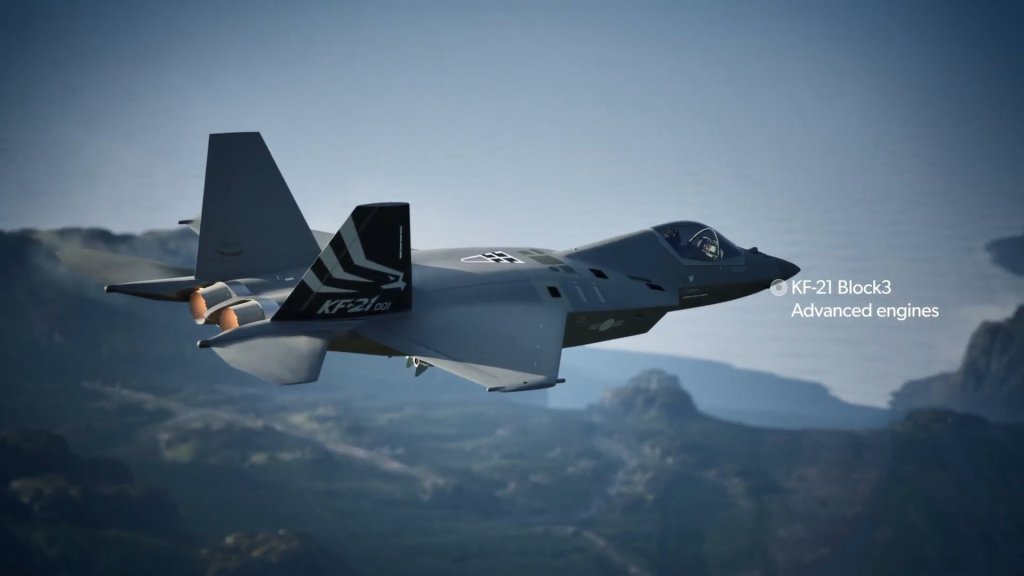
Image Source: Hanwha Aerospace
Hanwha Aerospace’s Vision for Sixth-Generation Fighters
Hanwha Aerospace has signaled its intention to develop a sixth-generation fighter by unveiling a conceptual design that builds on the advancements of the KF-21 fighter jet. This conceptual fighter is expected to feature cutting-edge technologies designed to give South Korea a competitive edge in the future of air combat. The fighter’s engine will be based on domestically developed gas turbine engines, which are currently being prepared for the KF-21 Block 3 fighter. Hanwha has emphasized its strategy to leverage this existing knowledge to propel the country’s aerospace technologies forward, particularly in the domain of aircraft engines.
In the promotional video, while specific technical details about the fighter jet remain scarce, the design hints at the direction South Korea is taking. The conceptual aircraft displays a tailless delta-wing configuration, a hallmark of designs focused on reducing radar cross-sections for improved stealth. This aircraft design integrates the fuselage with the wing structure, further enhancing its radar invisibility. The aircraft also features twin engines with thrust-vectoring nozzles and partially shrouded exhausts, suggesting efforts to reduce infrared signatures—a key aspect for achieving high-performance flight and supercruise capabilities.
Additionally, the design lacks external hardpoints for weapons, which may indicate the use of internal weapon bays, a key characteristic of sixth-generation fighters. The cockpit design further hints at the platform being optionally manned or fully autonomous, reflecting the current trend in sixth-generation aircraft development, which prioritizes flexibility between manned and unmanned missions. Furthermore, though external sensors are not depicted, sixth-generation designs typically incorporate 360-degree sensor coverage, onboard artificial intelligence (AI) for real-time threat analysis, and enhanced network connectivity for integration into multi-domain operations.
South Korea’s Technological Advancements in Sixth-Generation Development
South Korea has been laying the groundwork for a sixth-generation fighter by developing various technologies that are crucial for the future of air combat. These include the integration of unmanned aircraft systems (UAS), advanced AI for tactical situation awareness, and laser weaponry. The Korean government and defense agencies have been researching autonomy and AI technologies to reduce pilot workload and optimize combat performance.
One notable example is the research conducted by the Agency for Defense Development (ADD), which in 2020 successfully demonstrated a 20 kW laser weapon capable of striking targets several kilometers away. These advancements suggest that South Korea is focused on integrating high-energy laser weapons capable of intercepting ballistic missiles during their boost phase—one of the defining features expected of sixth-generation fighters.
AI is also central to South Korea’s approach. By 2035, AI is expected to assist fighter pilots in making evasive maneuvers based on real-time data about distance, speed, and direction. By 2045, autonomous drones are projected to operate independently in combat scenarios, guided by AI capable of decision-making with the cognitive power of 1,000 humans. Such systems would allow drones to conduct autonomous navigation without GPS and improve situational awareness, drastically reducing the pilot’s cognitive load.
Collaborative Efforts and Strategic Partnerships
In addition to its domestic developments, South Korea is also seeking international collaboration to enhance its sixth-generation fighter program. South Korean media reported in 2024 that the country is in talks with Saudi Arabia to jointly develop a sixth-generation fighter, leveraging the KF-21 platform. This partnership would accelerate the development process by building upon the existing KF-21 project, which is categorized as a 4.5-generation fighter. Saudi Arabia’s involvement could also bring additional expertise and resources, particularly after the country’s unsuccessful attempts to join the Global Combat Air Programme (GCAP) with the UK, Italy, and Japan.
Furthermore, in March 2025, Korea Aerospace Industries (KAI) signed an agreement with U.S.-based company Shield AI to integrate AI autonomy systems into future South Korean aerial platforms. Shield AI’s Hivemind Enterprise AI system will be incorporated into KAI’s aerial platforms, supporting mission planning, navigation, and real-time target identification, even in GPS-denied environments. This partnership underscores South Korea’s commitment to enhancing its sixth-generation fighter’s autonomy capabilities and solidifying its technological edge in the global defense industry.
The Global Context: A Competitive Future
As South Korea embarks on its sixth-generation fighter program, it is not alone in the race. Other global powers are pushing forward with their own projects, including the United States with its Next Generation Air Dominance (NGAD) program, the United Kingdom, Italy, and Japan with the GCAP Tempest project, and countries like Russia, China, India, and France also developing their own sixth-generation concepts.
South Korea’s efforts reflect its determination to not only develop an indigenous sixth-generation fighter but also to position itself as a significant player in the next era of air combat. This is consistent with the country’s approach in other defense sectors, where it has gained international recognition for the K2 Black Panther tank, K9 Thunder self-propelled howitzers, and the FA-50 light attack aircraft. The incorporation of AI, laser weapons, advanced stealth designs, and networked operations into South Korea’s sixth-generation fighter promises to elevate its capabilities to the cutting edge of modern warfare.
Shaping the Future of Air Supremacy
As South Korea pushes forward with its sixth-generation fighter program, the future of air supremacy is being reshaped. The country’s commitment to AI, laser weapons, autonomy, and advanced stealth technologies places it in a strong position to compete on the global stage. By leveraging existing developments in the KF-21 fighter program and forming strategic partnerships, South Korea is poised to create an advanced air platform that can dominate the skies in the coming decades.
The introduction of these next-generation capabilities will not only revolutionize air combat but also reinforce South Korea’s role as a major player in the global defense landscape. As the world’s military powers race to develop the future of aerial warfare, South Korea’s advancements in sixth-generation fighter technology will undoubtedly play a critical role in shaping the next era of air combat.
 Canada Defence Journal