
As trade tensions with the United States threaten to escalate once again, Manitoba is taking decisive steps to future-proof its economy and strengthen Canadian sovereignty in the North. In a bold pivot that blends national strategy with local opportunity, Premier Wab Kinew announced this week that Manitoba is now actively exploring the development of a second Arctic port, while simultaneously advancing a major hydroelectric and broadband corridor to Nunavut.
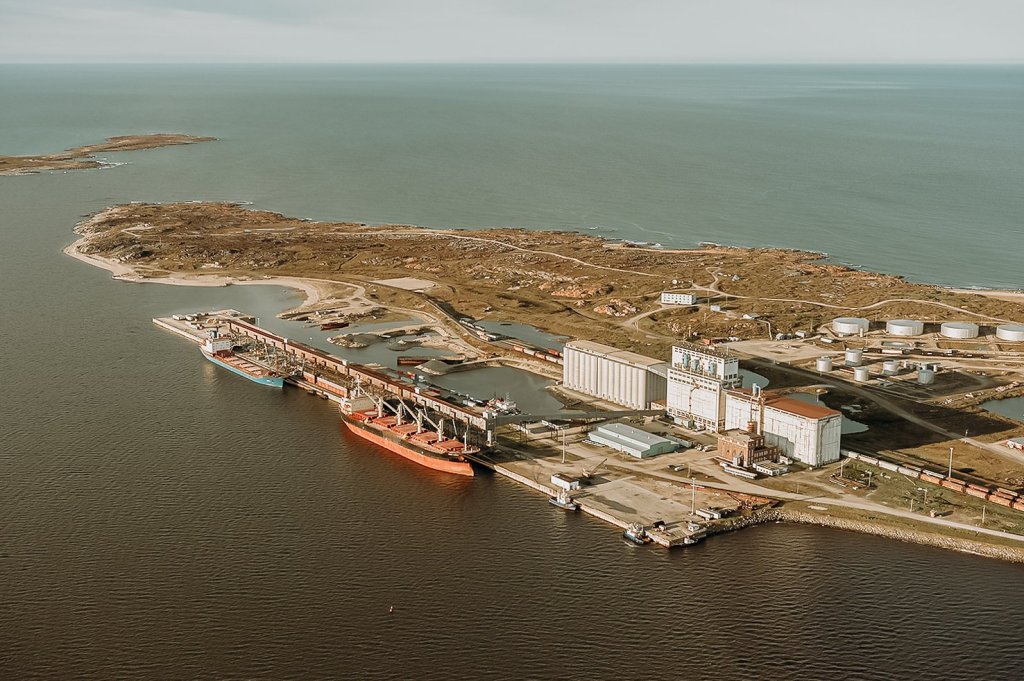
Port Of Churchill. Source: Arctic Gateway Group/ Mike Macri
The announcement, made during high-level meetings with European Union ambassadors in Winnipeg, signals a significant shift in Canada’s northern infrastructure strategy — one that could carry major implications for energy security, national resilience, and global trade.
“Canada needs alternative export routes — and that includes looking seriously at another port on Hudson Bay,” said Kinew, speaking after bilateral talks with 18 EU member states.
Port Nelson Reconsidered: Strategic Gateway to Europe
While the Port of Churchill remains Manitoba’s only Arctic deepwater port, its seasonal constraints and environmental sensitivities have reopened interest in Port Nelson, located near the mouth of the Nelson River. Once envisioned as Canada’s main Arctic shipping hub over a century ago, the site is now central to the NeeStaNan Utility Corridor — a Cree-led initiative to move critical Canadian exports like LNG, potash, fertilizer, and minerals to European and Asian markets through the Arctic.
European leaders, eyeing clean energy and critical minerals, have reportedly shown keen interest in the corridor’s potential to bypass bottlenecks in the US and offer direct access to Canada’s rich northern resources.
This port proposal aligns with growing national calls for “pre-approved” infrastructure corridors — championed by Alberta Premier Danielle Smith and echoed by federal leadership contenders like Mark Carney — aimed at giving provinces direct access to tidewater and international markets.
Powering the North: The Kivalliq Hydro-Fibre Link
In parallel, Manitoba and Nunavut have signed a renewed memorandum of understanding on the Kivalliq Hydro-Fibre Link, a $1.6-billion project that would connect Manitoba Hydro’s grid with remote Nunavut communities via a 1,200-kilometre transmission and broadband corridor.
Led by the Inuit-owned Nukik Corporation, the project is designed to displace diesel reliance, bridge the digital divide, and open the door to northern-led economic growth. Manitoba has already committed 50 megawatts of clean energy to the initiative — the first tangible power allocation to the North in what could become a generational infrastructure legacy.
“In light of trade uncertainty with the US, we’re seeing a real appetite for interprovincial projects that build up the North and connect Canadians,” said Kinew.
Nunavut Premier P.J. Akeeagok echoed this sentiment, calling the project essential to energy security, reconciliation, and long-term prosperity.
A Nation-Building Vision for the 21st Century
These developments come as Canada navigates the potential return of US protectionism, with growing fears of Trump-era trade barriers re-emerging. In that light, Manitoba’s ambitions are not just provincial — they’re national.
Premier Kinew framed the port and corridor projects as “nation-building” efforts that will not only unlock northern prosperity but position Canada as a global energy and resource supplier, independent of American infrastructure constraints.
“These projects aren’t just about Manitoba,” Kinew stated. “They’re about building a stronger, more independent Canada.”
Both the EU delegation and several federal candidates have reportedly expressed support for the initiatives, seeing them as part of a broader strategic realignment of Canadian trade and defence posture.
CDJ Analysis: Strategic Implications for Canadian Sovereignty
From a defence and national security perspective, these developments hold significant weight. A second Arctic port would not only serve economic goals but provide a strategic logistics hub in the North — a vital asset as Canada grapples with growing geopolitical competition in the Arctic.
Similarly, infrastructure that connects southern energy grids with the North strengthens Arctic sovereignty, bolsters NORAD modernization goals, and supports Indigenous-led development in some of the most under-serviced regions in the country.
As the geopolitical landscape shifts, Manitoba is positioning itself at the crossroads of trade, energy, and Arctic sovereignty. By embracing a second Arctic port and moving forward with a northern utility corridor, the province isn’t just reacting to trade uncertainty — it’s reshaping Canada’s infrastructure future.
This article was inspired by original reporting from the Western Standard, written by journalist Shaun Polczer.
 Canada Defence Journal