
In a significant display of allied maritime cooperation, Royal Navy frigate HMS Richmond and Royal Canadian Navy frigate HMCS Ville de Québec have departed Plymouth to join the United Kingdom’s premier maritime deployment for 2025 — the UK Carrier Strike Group (CSG).
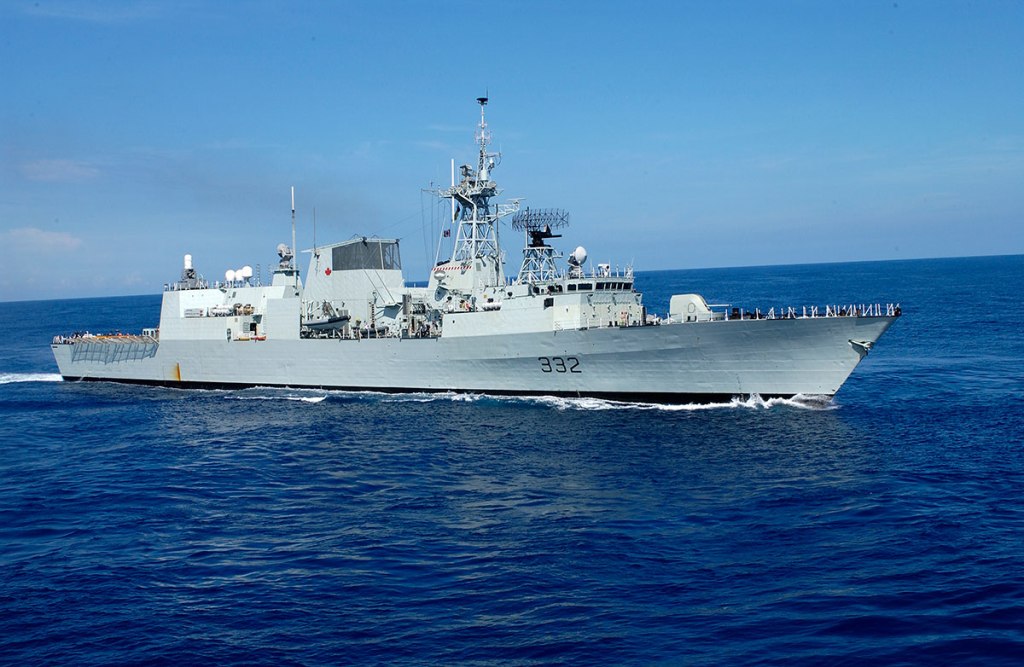
HMCS Ville de Québec (FFH 332). Image Source: Royal Canadian Navy
The task group, centered on aircraft carrier HMS Prince of Wales, will operate over the next eight months across strategic waters from the Mediterranean to the Indo-Pacific, in partnership with NATO and regional allies.
Canadian Participation in a Global Mission
Canada’s contribution to the strike group is embodied in the deployment of HMCS Ville de Québec, a Halifax-class frigate based out of Halifax, Nova Scotia. This marks Ville de Québec’s first deployment to the Indo-Pacific in its three-decade service history, reflecting Canada’s growing commitment to security and multilateral engagement in the region.
Commander Peter MacNeil, Commanding Officer of Ville de Québec, hailed the mission as “an incredible deployment,” adding:
“The crew has worked incredibly hard to get the ship ready and to represent Canada and the Royal Canadian Navy globally – with some of the absolute finest people Canada and the Canadian Armed Forces has to offer.”
Following intensive training over the past year, Ville de Québec joins a diverse international force aimed at enhancing regional security, deterring aggression, and promoting freedom of navigation across contested maritime domains.
HMS Richmond Leads UK Frigate Support
Meanwhile, HMS Richmond, a Type 23 frigate optimized for anti-submarine warfare, departed from Devonport Naval Base to fulfill a critical protective role within the strike group. Operating in concert with a Merlin Mk2 helicopter from 814 Naval Air Squadron, Richmond will serve as the strike group’s primary defense against underwater threats.
Commander Richard Kemp, HMS Richmond’s Commanding Officer, expressed pride in his ship’s readiness:
“I am eager to embark on what promises to be a challenging and rewarding deployment. My team in HMS Richmond have worked incredibly hard to prepare for the exciting period ahead, and I am extremely proud of their efforts.”
The strike group will conduct joint exercises and operational patrols with allied forces across multiple regions, including the Mediterranean, Middle East, Southeast Asia, and the Western Pacific. These engagements underscore the strategic intent to uphold a free and open Indo-Pacific alongside close partners such as Japan and Australia.
Building on Canada–UK Naval Ties
The joint deployment further strengthens the longstanding defense relationship between Canada and the United Kingdom. Both nations remain committed to multilateral cooperation through NATO and other regional frameworks, with naval operations playing a central role in projecting shared values abroad.
The task group also includes Royal Navy air defence destroyer HMS Dauntless, Royal Fleet Auxiliary ship Tidespring, and two Norwegian naval vessels — tanker HNoMS Maud and frigate HNoMS Roald Amundsen — highlighting the multinational character of the mission.
Strategic Implications
This high-profile deployment sends a clear message of allied resolve at a time of increasing global instability. From deterring state-based threats in contested maritime spaces to supporting humanitarian and disaster relief operations, the Carrier Strike Group offers a versatile and powerful platform for influence and reassurance.
With Canadian sailors now sailing alongside their British and Norwegian counterparts, the mission represents not only a technical and operational achievement — but a symbol of enduring transatlantic partnership.
The Carrier Strike Group is expected to return to home ports by December 2025, just in time for crews to reunite with families for the holidays — a fitting conclusion to a historic and far-reaching mission.
 Canada Defence Journal