
In a landmark announcement that could redefine aerial warfare for decades to come, the United States has officially unveiled its next-generation fighter aircraft — the F-47, developed by Boeing. Billed as the world’s first operational sixth-generation fighter jet, the F-47 is poised to outclass all current combat aircraft and usher in a new era of autonomous, networked, and high-speed air dominance.
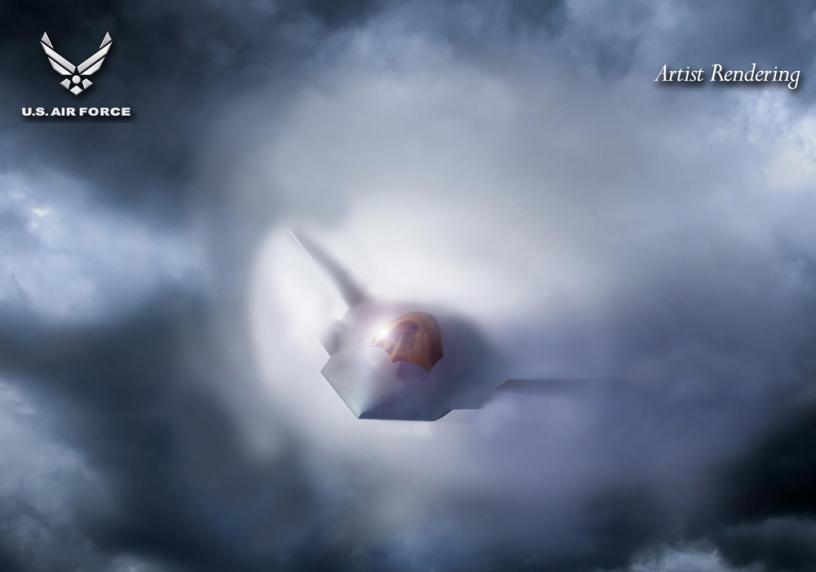
Shown is a graphical artist rendering of the Next Generation Air Dominance (NGAD) Platform. Source: U.S. Air Force graphic.
The announcement was made over the weekend by former President Donald Trump, who revealed that the US Air Force had selected Boeing after a hard-fought competition among leading defense manufacturers.
“The new jet, chosen by the generals and named F-47, will be the most advanced, capable, and deadly aircraft ever built,” Trump declared in a White House statement.
Features of a Sixth-Generation Marvel
According to early briefings, the F-47 will feature:
- Advanced stealth capabilities far beyond those of the F-35 and F-22
- Integrated AI for decision-making and mission execution
- Autonomous and semi-autonomous operation with unmanned support drones
- Supercruise ability — sustained supersonic speeds without afterburners
- Hypersonic missile compatibility
- Next-gen electronic warfare and countermeasures
- Aerial refueling and extended-range ops
A prototype of the aircraft has reportedly been flying in secret over the past five years, hinting at an aggressive and highly classified development timeline under the US’s Next Generation Air Dominance (NGAD) program.
Boeing’s Role and Strategic Investment
Boeing’s win is a monumental victory for the company, which has been working to revitalize its fighter aircraft portfolio. Known for platforms such as the F-15EX and F/A-18 Super Hornet, Boeing’s jump into sixth-generation technology underscores its future-forward strategy in the defense space.
Steve Parker, CEO of Boeing’s Defense, Space, and Security division, described the program as “the largest investment in the company’s history” and emphasized Boeing’s readiness to deliver the most innovative air platform the world has seen.
Strategic Implications for Allies — Including Canada
While the F-47 is an American initiative, the technological leap it represents will inevitably shape allied air forces — particularly those looking to modernize and maintain interoperability with the US Air Force.
Canada, which currently operates the CF-18 Hornet and is in the process of acquiring F-35A aircraft through the Future Fighter Capability Project (FFCP), may need to consider how sixth-generation technologies will influence future procurement strategies, training requirements, and NORAD modernization efforts.
As adversaries such as China and Russia invest in stealth fighters and hypersonic systems, allied interoperability will depend not just on shared doctrine, but shared access to next-generation platforms and data networks.
“Peace Through Strength”
US Air Force Chief of Staff General David Alvin framed the F-47 not just as a weapon, but as a symbol of deterrence and future security.
“The new jet symbolizes what peace through strength will look like in the future,” said General Alvin.
Echoing this sentiment, US Secretary of Defense Mark Esper emphasized that reviving the NGAD program — nearly shelved during the Biden administration — reflects America’s resolve to maintain global air dominance and technological superiority.
What This Means for Global Security
From a Canadian defence perspective, the development of the F-47 raises important questions: How soon will sixth-generation aircraft shape NORAD and NATO joint operations? What role will Canada play in supporting and integrating with these advanced platforms?
As Canada’s defence policy evolves to meet 21st-century threats — including Arctic security, cyber operations, and Indo-Pacific engagement — access to cutting-edge platforms like the F-47 could become a matter not just of capability, but strategic necessity.
 Canada Defence Journal