
The future of Canada’s next-generation fighter fleet may not be as settled as once believed. In a recent interview with Swedish media, Saab CEO Micael Johansson confirmed that the company is actively engaged in discussions with Canada regarding the potential sale of its JAS-39E/F Gripen fighter jets—despite Canada’s 2023 commitment to the F-35 Lightning II program.
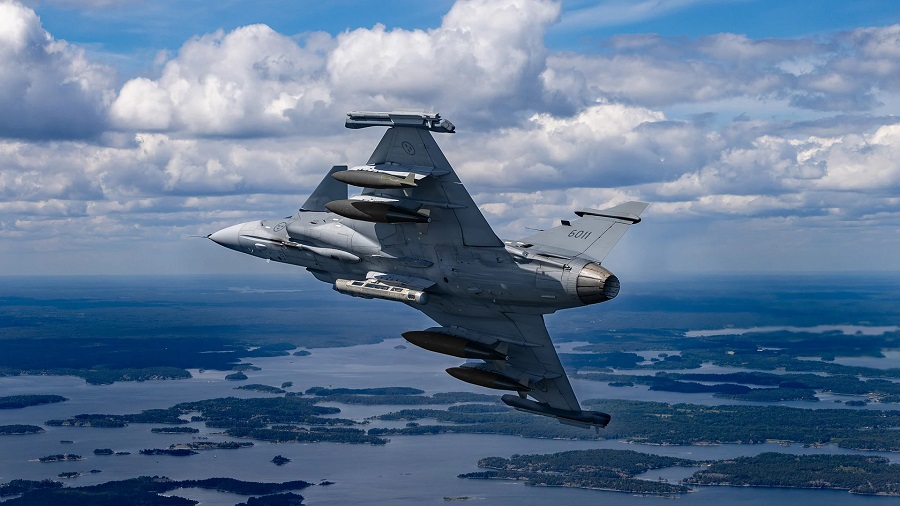
Image Source: Saab.
This development comes amid a public review of the $19 billion CAD contract for 88 F-35s, as Canadian officials express renewed concerns about the country’s strategic dependence on the United States.
A Shift in Strategic Thinking?
Defence Minister Bill Blair has openly raised questions about the F-35 deal in light of increasing political instability and trade tensions with Washington. While the government has not cancelled the contract, Blair indicated that Ottawa is exploring alternative options, including the possibility of operating a mixed fleet.
That potential shift has opened the door for Saab to re-enter the conversation, offering Gripen as a reliable, sovereign, and interoperable European alternative.
Gripen’s Pitch: Independence, Industry, and NORAD
Johansson emphasized that Saab’s offering would include local industrial partnerships, technology transfers, and full alignment with NORAD commitments—a significant consideration as Canada continues to balance its obligations under the North American aerospace defence framework with its need for operational autonomy.
The Gripen has been lauded for its cost-effectiveness, ease of maintenance, and flexibility in operating from austere environments—all qualities that align well with Canada’s vast geography and defence needs.
Moreover, Saab’s recent success in securing a deal with Colombia has bolstered the fighter’s credibility on the global stage, demonstrating a growing interest in alternatives to U.S.-led platforms.
A Long and Contested Procurement Process
Canada’s fighter jet replacement program has been marked by political and industrial turbulence since its launch in 2017. The competition originally drew proposals from Lockheed Martin (F-35), Boeing (F/A-18E/F Super Hornet), Dassault Aviation (Rafale), Eurofighter, and Saab (Gripen).
- Dassault exited in 2018, citing Canada’s NORAD interoperability requirements.
- Boeing was eliminated from the running in 2021.
- In 2022, the F-35 was selected, and a formal contract was signed in early 2023.
Despite the signing, the evolving geopolitical landscape and growing public discourse around sovereignty, industrial capability, and strategic independence have kept the issue alive.
What’s Next?
With talks ongoing between Saab and Canada, and with Defence Minister Blair signaling flexibility in procurement strategy, the future of Canada’s air power mix is once again a topic of serious consideration.
Whether Canada ultimately proceeds with a full F-35 fleet, pivots to include Gripens, or embraces a hybrid model remains to be seen—but the debate reflects a broader reassessment of the country’s strategic alignment and defence posture in an increasingly multipolar world.
 Canada Defence Journal