
After more than a decade out of commission, HMCS Corner Brook is set to return to operational status this summer, marking a rare moment of momentum for Canada’s embattled submarine fleet. But as the Department of National Defence (DND) prepares to bring one boat back online, a parallel effort is already underway to replace the entire Victoria-class fleet — a process that could cost up to $60 billion and span more than a decade.
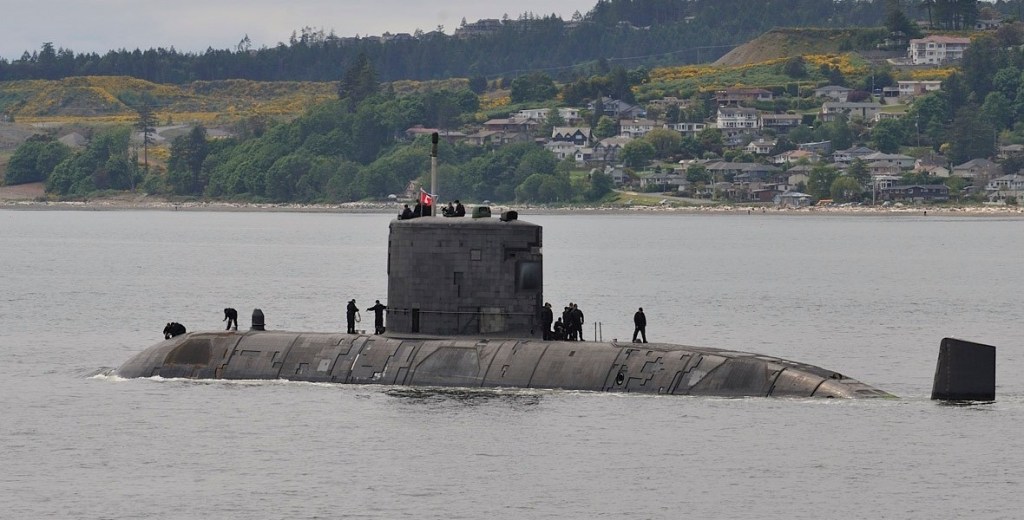
HMCS Corner Brook. Photo: Royal Canadian Navy
A Costly Comeback for HMCS Corner Brook
Corner Brook, one of four second-hand Victoria-class submarines acquired from the United Kingdom in the early 2000s, was damaged during a training accident in 2011 when it struck the ocean floor. Sidelined in 2014 for maintenance and upgrades, the submarine faced significant setbacks during its extended docking work period (EDWP), including a fire in 2019 and additional onboard system damage in 2020.
Now, after completing sea trials and training, the DND confirmed the submarine will be deployable by summer 2025.
“HMCS Corner Brook will operate in the Pacific, focusing on defence and Indo-Pacific operations,” said DND spokesperson Alex Tétreault.
The vessel’s repair and modernization process cost $715 million, including $20 million to fix damage from the 2011 collision. Corner Brook is now being billed as the most advanced submarine in the Canadian fleet — despite being 34 years old.
Victoria-Class: Persistent Problems
The broader Victoria-class fleet has struggled with reliability since Canada acquired the boats between 2000 and 2004. Originally stored by the UK Navy with water in their fuel tanks, the submarines suffered from rusted pipes, cracked valves, faulty welds, and hull dents. Additional setbacks were caused by delays in installing Canadian combat systems, including fire control and communications equipment.
HMCS Chicoutimi suffered a fatal fire in 2004, which killed one officer and seriously injured others. HMCS Victoria required hull repairs due to structural issues, and the fleet as a whole has spent relatively little time at sea compared to their expected operational capacity.
Critics argue that Canada has spent billions maintaining the submarines with limited return on investment, raising serious questions about the fleet’s long-term value.
Future Fleet: Canada Looks Ahead to 12 New Submarines
Acknowledging these limitations, the federal government is now moving ahead with plans to replace the Victoria-class with a new fleet of up to 12 conventionally powered, under-ice capable submarines.
In September 2024, Defence Minister Bill Blair’s office confirmed that the DND had issued a request for information to shipbuilders, seeking input on their ability to deliver next-generation submarines.
According to DND briefings obtained by the Ottawa Citizen, the first of these new submarines is not expected to enter service until 2037, highlighting the long-term nature of the transition.
Among the stated requirements for the new boats:
- 7,000 nautical mile operating range
- 21 days of continuous dived operations
- 60 days of self-sustained deployment
- Compatibility with U.S. military communication systems
- Arctic under-ice capability
No official cost has been disclosed, but DND documents and internal Navy proposals suggest an estimated price tag of $60 billion.
Challenges Ahead: Crew, Cost, and Capacity
While the ambition is clear, Canada faces multiple challenges in executing this plan. Historically, the Navy has struggled to train and retain enough qualified submariners to crew even its current four-boat fleet — a concern that would be significantly amplified with 12 new submarines.
Additionally, with defence budgets under pressure and competing modernization priorities — including fighter jet procurement and naval surface fleet upgrades — the financial and logistical demands of this undersea program could prove difficult to manage.
As HMCS Corner Brook re-enters service, it offers a rare operational boost to a submarine fleet often mired in technical and reputational issues. But the real story is forward-looking: Canada’s future undersea strategy will hinge on the successful acquisition and deployment of a new, Arctic-ready fleet.
 Canada Defence Journal